|
|
MYSTERY OF THE
TEXAS TWOSTEP
CHAPTER EIGHTY EIGHT:
SYNCHRONICITY
Written by Rick
Archer
|
 |
Rick
Archer's Note:
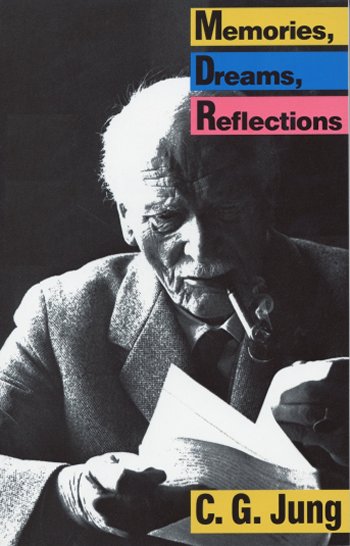
Carl Jung
was an influential Swiss psychologist who
was a contemporary of Sigmund Freud. Both men were deeply interested in
irrational behavior, but took different
approaches. Freud, a giant in
the developing field of Psychology, came up
with a complicated theory of human behavior
based on the Id, the Ego, and the Superego.
Freud used hidden conflicts of the
Unconscious as a way to explain the
crazy things we do.
While
not necessarily calling Freud's ideas wrong,
Jung went one step further. He
developed an equally complicated theory
known as Synchronicity. At the
risk of oversimplification, one might argue
that Jung's Synchronicity was Fate by a
different name.
Carl Jung was the only Western scholar I knew
who possessed public credibility on the
subject of Mysticism. Jung's mother was
said to have spoken with the dead. Her
embrace of the Supernatural formed the basis
of her son's controversial ideas. Jung
suggested paranormal events such as
ghosts, ESP,
premonitions, and
precognitive dreams might turn out to be
natural events for which science has not yet
advanced far enough to comprehend.
In
particular, Jung strongly emphasized the importance
of Coincidence as a way to suggest the involvement
of the Hidden World in our daily lives.
Someone calls and you say, "Huh, I was just
thinking about you!" Or two people
accidentally begin singing the same song at the same
time. These are the small things. More
important,
Glen Hunsucker's
dance studio becomes available at the exact moment
Rick's dance program needs a home.
|
Nothing is
happenstance in Jung’s world. Jung believed if we knew
the truth about how perfectly the Universe was constructed, we would
realize no one but God could possibly organize the phenomena of our
world in such a profound way. Jung claimed that
most people do not realize
the significance of
Coincidence.
He postulated that Coincidences are indicators of an invisible
network that connects everyone and everything. Jung theorized
that humans subconsciously transmit unobserved energetic
information which other people telepathically process and react to.
This meant surprising events like my random meeting with
benefactors such as Ted Weisgal and Linda Shuler
might not be quite as random as people think they are.
It was Carl
Jung's advice to pay close attention to Coincidence
that led me to create my List of Suspected
Supernatural Events in 1970. I started with 20
events dating back to childhood. At the dawn
of 1981, my List
stood at 95. This averaged out to 7 strange
events per year over the past decade, by far the
most active 'Supernatural' period of my life.
During this time,
I had reached two conclusions. First, some
Coincidences are a lot more important than others.
Roughly half my List were curious incidents,
things I call 'Eyebrow Raisers'. I
decided to label these Events as 'Suspicious'.
The other half were events that absolutely blew
my mind. A good example would be Herb Fried
and Glen Hunsucker's last-minute rescues. These
were very 'Serious' Coincidences.
Then there was another type of
Coincidence where a series of apparent unrelated
events suddenly seemed linked once the outcome was
known. For example, the Death of Disco led to
my Meyerland Gamble which led to Joanne's help which
led to Fright Night which led to TGIS. When
seen from a broader perspective, the sum total of
these events helped Rick Archer become Houston's first Western
teacher. I decided to borrow Carl Jung's term
Synchronicity for my own purposes.
I used 'Synchronicity' for a series of random events
which in Hindsight appear to be directly connected. This
chapter tells the story of my favorite
Synchronicity.
|
 |
|
LIMBO MONTH NINETEEN
JANUARY 1981
THE PLANETS LINE UP
|
|
 |
 |
I believe in the
Arabic proverb that asserts Life is divided into two days.
Both days will be a Test. On the Brightest Day,
everything will break our way and good deeds can be done.
On the Darkest Day, everything will go wrong no matter how
hard we try.
This is our chance to develop Judgment and Wisdom born of
Hardship.
I do not take
this proverb literally. I am more inclined to think in
terms of cycles. For example, I have hit Rock Bottom
six times in my life. I have also had hot streaks
where Good Luck followed me around like a puppy dog.
1979, the Year
of Living Dangerously, had been
the toughest year of my life. Call it my Darkest Day.
The consequences of my mistakes sent me to a
prison known as Limbo Captivity throughout
1980.
Although I spent the entire year paying interest on my considerable
Karmic Debt following Doorstep Night, 1980 had been a big improvement
over 1979.
1981 was my
Brightest Day. This would be the most amazing year of my life. In an
Astrological sense, all the planets lined up
perfectly for me. As one student after another
beat a path to our door, 1981 marked a glorious pinnacle for my
Magic Carpet Ride. Every possible advantage broke
my way.
|
Here is a list of the six events that lined up for me.
Please note that these events have no direct relationship to
each other.
•
Moving to Glen's dance studio was
pure magic.
Convenient location, large rooms
and friendly atmosphere made all the difference in the
world. Our new home at Dance Arts was a happy place for us. As opposed to the gloom and hostility of
Stevens of
Hollywood, laughter and friendship predominated.
•
In
January 1981 Leisure Learning
began
contributing countless new students. Ted Weisgal and I
discovered our new partnership was sheer dynamite.
•
TGIS
continued to send a steady stream of 'Newly single,
Looking for Love' dance students to my doorstep each
month.
•
The switch to two-hour classes paid a huge dividend.
Previously a course consisted of 8 one-hour classes
spread over a two month period. Our new format was
4 two-hour classes held in one month. Students
loved the new two-hour classes because it accelerated their
speed of learning and it saved them 4 unnecessary trips to the studio.
In addition, classes ended early enough for students to
go dancing at a club afterwards.
•
The Western Swing
gave countless 'One and Done' students from
the previous year a reason to come back and see us again.
Using Western Swing to revolutionize Country dancing,
attendance at the studio multiplied more than I
ever imagined.
•
The Winchester Club
was the final piece of the puzzle. This club
would blast my dance program into the upper
stratosphere.
1981 was the
year I could do no wrong. From the opening bell, every moving part worked in perfect
Synchronicity,
every decision turned to gold... except for my touch with
women, of course. Some things never change.
|
JANUARY 1981
WESTERN SWING
DELIVERS
|
 |
Dance Time in Texas
It's dance time in Texas and we're striking up
the band
Let's go honky tonkin',
come and take my hand
It's dance time in Texas where wine and
music flows
We'll do that Texas Two Step and that old
Cotton-Eyed Joe
I'll take you honky tonkin' in my old pick up
truck
It's dance time in Texas and the music lifts you
up!
--
George Strait
|
 |
It is impossible to convey the sense of relief I felt from
our move to Dance Arts. In almost no
time the nightmare of spending three years at
the Stevens House of Horrors was erased. I had
to pinch myself to make sure I wasn't dreaming. Once I escaped
Stevens of Hollywood, it was like
surviving an arduous journey through the Himalayas only to
stumble upon a peaceful Shangri-La.
No longer forced to look over my
shoulder, I was able to relax and concentrate on taking the
steps
necessary to build my business. The most
important project involved converting stationary Disco patterns
into traveling Double Turn patterns known as Western
Swing. Now that we had solved the Riddle of the Double Turns, Bob and I began churning out
patterns left and right. Each week Bob and I would
meet to cook something up, then let our Saturday morning 'Western
Swing Committee' polish the move. By incorporating every major
Disco move into Western dancing, we synthesized an important
new dance style
that had not existed prior to Urban Cowboy.
Was I the
creator of Western Swing? No, of course not. It
is rare for any invention to be credited to just one person.
For example, I got the idea for the Double
Turns from watching other dancers. Then I got the
timing secret from Herb Fried. That said, I will take
credit for two things. I was the first person in
Houston to teach the Double Turns. I was also the main innovator. Spearheading the development of
countless patterns, my dance
program was considered the best place to learn Western
dancing.
The combination of Western Swing and our move
to Dance Arts got our dance program off to an explosive start in
1981.
All along my biggest fear
had been the simplicity of Western dancing would
cause its downfall. Thanks to the addition of
these new Double
Turn patterns, Simplicity would never be a problem
again. Overnight
Western dancing had become just as complicated as Disco
partner dancing had ever been,
maybe even more so.
This new style was so intricate students could take
lessons for an entire year and still not exhaust my
bottomless pit of Western Swing
patterns. What a gift it
was to have this exciting new dance style to offer. The
knowledge that Bob and I had secretly encoded 'Disco patterns'
into the DNA of Western Swing made it all the sweeter.
Disco lived on! Yes, I still regretted Disco's premature death here in
Houston,
but I was tickled to see it reincarnate into Western
Swing.
This new
style of dance, 'Disco on the Run' as Bob called
it, was successful beyond
our wildest dreams.
Bob
had predicted this new dance would revolutionize Western dancing.
To my great satisfaction, time proved him right.
Western dancing started as a fad thanks to Urban
Cowboy, but
the popularity of this new Double Turn
system escalated Western dancing well beyond 'fad status'.
Due
to the love affair Texans have with Country-Western music,
these new Double Turn patterns made the dancing
exciting as well. No longer was it permissible to move
from Chicago or Detroit and be accepted without reservation.
Boots and a pickup truck were a nice start, but the ability to dance the Texas
Twostep was proof that you were a True Texan at heart
They say East
Coast Swing started in Harlem. West Coast Swing
started in Los Angeles. Salsa dancing started in
Miami. Houston gets 100% of the credit for
revolutionizing Western dance. The appearance of
Western Swing turned Houston into the Western Dance capital
of America. Overnight Houston had more
people dancing to Western music than any other city in
America (and still does).
Now that Western Dance had gained the enviable status as an
excellent way for boy meets girl, girl meets boy, the floors
were guaranteed to remain full. The new style of
Western music helped as well. Each night countless pretty girls did spins to the uptempo music of George Strait,
Reba McEntire, and Garth Brooks. Flying hair and the happy
laughter of the women enticed men
to turn them again and again, and again some more!
The result was sensational. Western dancing in Houston became exciting,
fluid and stylish. Once the ladies realized how much
fun it was to twirl to great music with cute guys as their partner, this new
dance style caught on like wildfire. Over the space of two years, 1980 and 1981, Western dancing became a permanent fixture here in
Houston.
Nor did it stop there. The
Western Swing
breakthrough combined with improvements in Country-Western music
helped
Western partner dancing become a permanent part of the American
landscape.
|
JANUARY 1981
WESTERN DANCING
DOMINATES
|
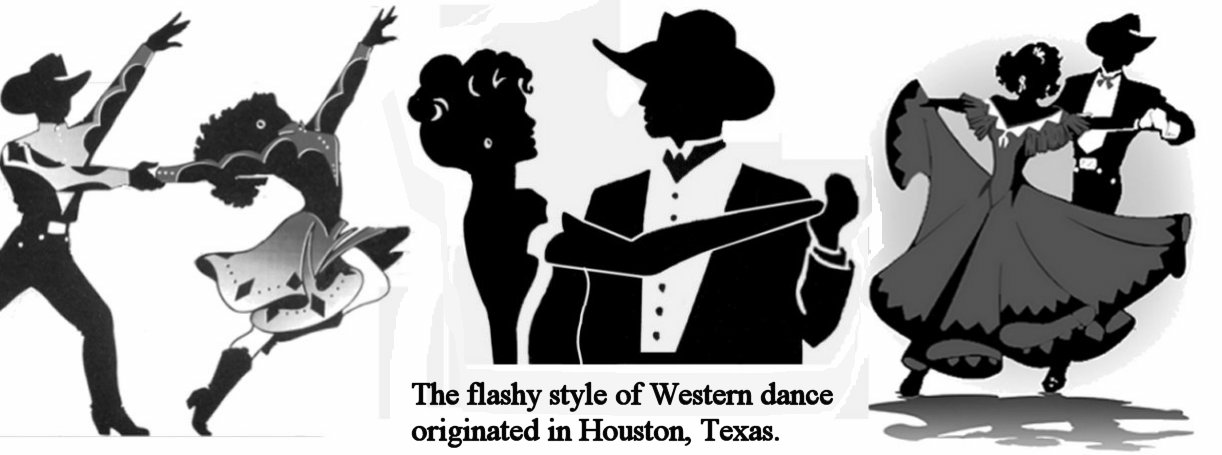
The story of
how Western Dance became important in Houston
is extremely ironic. Dance fads are supposed to react
to something. For example, Chubby Checker sings a song, the Twist
is born. John Travolta displays partner dancing in
Saturday Night Fever, Disco partner dancing
is born. Not Western dancing. In this case, the
cart came before the horse. Urban
Cowboy promised it would do for Western dancing what
Saturday Night Fever had done for Disco
dancing. Did it deliver? Hmm. Yes and No. Yes, Western
Dancing did improve, but for all the wrong reasons. Everyone assumed
Travolta would revolutionize Western dancing just like he
did for Disco. We were told to wait for John to do some exciting Twostep moves in the movie.
Then
everyone would rush out and sign up lessons.
That was not
how it happened. Sad to say, the much ballyhooed
dancing in Urban Cowboy was lame beyond
belief. The movie failed to display a single dance
move anyone from my studio had not already seen a
thousand times before.
However, I
will say Travolta served as an inspiration.
His presence here in Houston intensified interest in
Western dancing so much that club owners voluntarily
transformed their Disco clubs into Western clubs.
At this point, the Texas Aggies had plenty of dance
floors to continue the dance tradition they had learned
while in college. Thanks to innovations
that had originated at Texas A&M, Western dancing began
improving half a year before the movie was released.
However, I contend that it was Disco that provided the
major push. Once the Discos
were gone, the disenfranchised Disco Dancers had nowhere to go but Western
clubs. Once the Disco dancers saw how pathetic the Western dancing was,
they used their memory of Disco patterns to invent a new style
of Western dancing more to their liking.
First the Aggies, then the displaced Disco
dancers helped Western dancing improve rapidly.
That
said, we should thank Travolta for the initial spark. No
disrespect to Dennis Quaid or Patrick Swayze, but no one
in Houston had ever heard of them in 1979. Since
both men were relatively unknown, I seriously doubt
giving them the role would have caused Houston Discos to close one
year prior to the movie premiere. Why would Houston
Nightclubs gamble turning to Western AHEAD OF TIME based on
Dennis Quaid or Patrick Swayze? Only John Travolta had
the power to make it happen. In other words,
although Travolta disappointed us with his dancing, his
presence during the filming got the ball rolling. From there, the
sophistication of modern Western dancing came directly from
displaced Disco Dancers such as myself. No matter how
much it might hurt a bitter Cowboy to admit, the Western Swing
phoenix rose from the ashes of Disco's premature death.
|
Western
Swing was a magnet
that drew
countless students to my program. By beating everyone
else to the punch, people raced to our classes to be the
first to learn these exciting new Double Turn patterns. In my case,
it was the answer to a prayer.
Western dancing in its
original form was far too simple to hold the interest of my
disgruntled ex-Disco students for long. I had long believed the only way I could
stay in business was to make Western
dancing more exciting. So imagine my satisfaction when
the Double Turns of
Western Swing
lured countless former students to my dance program to learn
the secrets of this new development.
The moment they heard that Western dancing had just gotten a
lot more interesting, they rushed back to check it out.
My good fortune
did not stop there.
TGIS continued to be an endless source of new
students. The constant antics of this enthusiastic singles
organization was living proof that Slow Dance and
Romance went hand in hand. Just wait till I get to the
stories.
Starting in
January 1981,
Ted Weisgal's
Leisure Learning sent me a legion of new western dancers. Each month 50-75 new
students signed up through this program.
Over time
Leisure Learning would become the foundation of
my growing dance program.
My mailing list publicized our schedule and Word of Mouth
took it from there. I never ceased to be
amazed at how many people there were in Houston who still
did not have a clue how to western dance. Starting in 1980,
current and former students passed the word to friends,
relatives and
co-workers
that my program was the place to take Western classes.
I had never seen so many students in my life.
Thanks to a considerable number of Lucky Breaks, plenty of
help from friends like Bob Job and Judy Price, plus a lot of
hard work, I created the largest country-western dance
program in Houston.
|
 |
 |
Western dancing
was here to stay and I was proud to play a major
role. However, there were more changes to come.
There were several developments in 1981 that took me completely by surprise.
Now that Western Swing
was on the scene, Western dancing was the coolest
thing in town. These complicated Double Turns were
just the kind of challenge talented dancers loved to master.
The women enjoyed the flashy turns so much that the men got
caught up in the enthusiasm. All over Houston
guys were spinning the girls silly.
However, not
everyone was happy. Now that Western dancing was all
the rage, there were a lot of Houston Ballroom and Disco instructors who were out of work. With
Disco gone and no one even
remotely interested in Ballroom dancing, despair was
rampant. Fortunately,
there was a silver lining.
|
|
|
It took them a
while to figure it out, but Houston's Ballroom instructors
finally made the same discovery I had back in January
1980.
If you
could look past the blue jeans and a radical difference
in the music, Western
dancing and Ballroom dancing had a lot in common.
It began to dawn
on these Ballroom teachers that the Texas Twostep was a form
of Foxtrot. Ballroom Waltz patterns could be danced to
Western Waltz music. The Cha-Cha worked just fine to
Polka music. East Coast Swing worked to Western
Rockabilly music. Huh, imagine that. Why not teach
fancy Ballroom patterns and disguise the moves as 'Western dancing'?
With a big sigh,
Houston's Ballroom instructors
swallowed their pride and began to teach Western dance using
Ballroom principles. This led to changes such as
placing the man's hand on the lady's back, not around her
neck. Once Houston's
Western dancers saw what a difference professional training
could make in their appearance on the floor, those
out-of-work Ballroom instructors were back in business.
Now something really crazy happened.
Western Dancing evolved far beyond anything I had
ever imagined.
Lo and behold,
Kicker dancers began to care about Style!! Knock me
over with a feather! Now that the Ballroom
influence added much-needed polish and styling to everyone's
dancing, many ladies swapped their blue jeans for
pretty dance dresses. The men not only learned frame, posture and
footwork, they danced complicated patterns while wearing a
hat.
Thanks to the Ballroom influence, Houston's best
Western dancers began to resemble top-flight Ballroom
dancers. The poise and
polish served to make Western dancing even more popular than
I could have ever imagined. In fact, the day
would come when Western Dance Competitions became the rage.
The Western dancing was just as fancy as the dancing at the
Ballroom competitions. Why? Because everyone
danced the same patterns. The only difference was the
clothes and the music.
|
 |
|
 |
I watched in awe
as Western dancing became sophisticated. In my wildest
dreams, I never imagined 'Sophistication' and 'Western
Dancing' could be used in the same sentence.
Nevertheless, that is
what happened. I embraced the
change wholeheartedly. Considering how disgusted I had
been with the original state of Country dancing, I was truly
amazed at how beautiful this style of dancing had become.
More and more,
the Western dance floors in Houston were marked with couples
who made Western dancing look elegant and graceful.
Houston became very dance conscious which in turn directly
benefitted my studio during my Year of Synchronicity.
The
enthusiasm for Western Dancing did not stop there.
With Houston serving as the incubator, by
the time
the Nineties rolled around, Western Dancing had become so popular
they began holding Country-Western dance competitions across
America.
Western
Swing was responsible for initiating this movement. Since
my studio was the first to begin teaching Western
Swing classes in November 1980, that means the
Revolution in Western Dancing started right before my eyes.
My dance studio served as the epicenter.
|
JANUARY 1981
WINCHESTER CLUB
|
The combination of a popular new location, a popular new
dance, plus the infusion of new students from Leisure
Learning and TGIS catapulted my dance program into outer
space in January 1981. However, it took an urgent
problem to set the final piece of the puzzle into
place.
Thanks to the Synchronicity, January classes were so
swollen they filled our rooms to the limit. I barely
had enough space to accommodate everyone. Bless their
hearts, the students were having so much fun, they rarely
complained. However, I knew how uncomfortable they
were. I finally solved the crowding problem by adding
Sunday afternoon classes to handle the overflow. And
when Sunday got too busy, I added Saturday classes as
well. Thank goodness Dance Arts was large enough to
accommodate the expansion.
|
However, there was a new problem
for which I had no answer. There were so many dancers at my
studio, we outgrew our favorite dance venues
such as Cowboy and San Antone Rose.
On a Monday night in the middle of class, a lady
named Delores spoke out.
"Gosh, Rick,
wherever our group goes dancing, there are so many of us, there
isn't enough room on the floor for us all. We end
up standing still. Going dancing isn't fun any
more."
I groaned. "Delores, I agree with you.
We need a bigger place to go dancing. Does anybody
have a suggestion?"
That is when Steve spoke up.
"I have an idea,
Rick. Why don't we try the Winchester Club?"
I
immediately flinched. Winchester... a name which shall live in
infamy!! I had never been to the
Winchester, but I knew about it. How
could I forget the Ides of Waltz? The Winchester
Club was the
place where Devin and Mona had been knocked over by yahoos
when they tried the Ballroom Waltz Boxstep I had taught
them. That Waltz mishap had led to Fright Night, an ordeal
which cost me at least six of my
precious nine cat
lives.
Due to lingering animosity I felt stemming from that incident,
so far I
had avoided visiting the
Winchester Club. Based on rumors, I assumed the club was populated by badass
rednecks and creepy lowlifes. Gee, just the kind of place to take my clean-cut yuppie professionals.
On the other hand, the fashionable western bars like
Cowboy were too
crowded. Furthermore, my new middle name was 'open-minded'.
Ever since the humiliation of the Double Turn
Riddle, I was not so quick to automatically
dismiss other people's ideas. Perhaps Steve's suggestion required
further investigation. With that thought, I decided to give the honky-tonk a try.
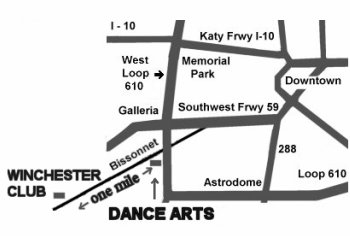
"Okay, Steve, where is the Winchester Club
located? I honestly have no idea where it is."
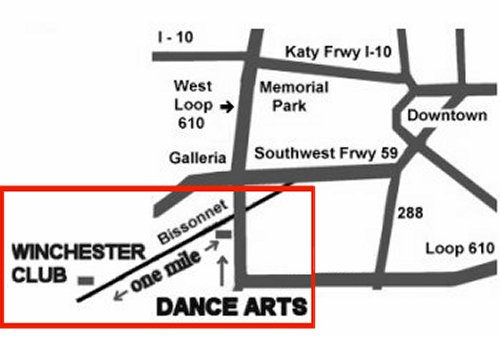
"Good grief,
you don't know? The Winchester Club
is right down the street. Go out the door, turn
left, drive a mile on Bissonnet, and you're there. It's a
straight shot. Since the Winchester
is on the same street as the studio, there is no way
anyone can possibly get lost trying to find it. I
have been there a couple of times. The floor is
enormous. It is big enough for every one of
us to
dance at the same time. If you want to look, I
think it is open on Monday nights."
One mile? I
had not realized the Winchester was so close
to the studio. Considering the club was just down the street, I told my class I would check it
out. That night I drove by after class.
The moment I saw the sea of pickup trucks parked out front, I almost
turned around. I could feel my
Cactus Club and Gilley's prejudice returning. But I
forced myself to go through with it anyway. After all,
wasn't my new nickname 'Open-minded Rick'? I swallowed hard, paid the cover
charge, and went inside to look it over.
I had heard people refer to the Winchester as
'Gilley's Houston'. Observing an ocean of
beer-guzzling yahoos sprawled in every direction, now I knew
why. Sure enough, the Winchester catered to
a rough blue collar crowd identical to Gilley's.
This enormous run-down bar was a serious redneck haven. I did not feel comfortable due to
several
hostile stares. Next time remind me not to wear a polo shirt.
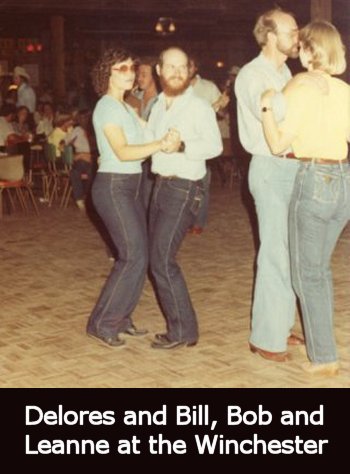
Steve was right about one thing... the
Winchester Club
was big enough for my entire crowd thanks to its huge dance floor.
This was the biggest dance
floor I had ever seen. Estimating the dance floor
could hold 400 people at one time, this club might be
the answer to my prayers. The club also
had plenty of tables where people could sit and chat.
However, there was one serious problem... the music was
awful!! The house band played the same Outlaw kicker music that made me sick in my
stomach. The moment I heard the familiar strains of 'up
against the wall, redneck mutha...', I told myself to forget this place.
And with that, my days of being open-minded were over. I
would rather go to a crowded yuppie western bar like
San Antone Rose with the new western sound than dance to this
awful music.
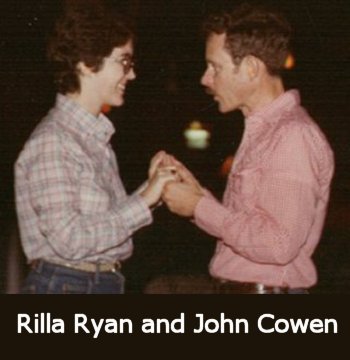
I
was about to leave when one of my students spotted me and rushed over.
Catching me at
the door, Rilla Ryan invited me to come join her group of
friends. There was no point in being rude, so I
followed Rilla back to her table. Don't forget I was
in Limbo. Even though the music was
awful, joining this friendly lady and her
eight companions beat driving home to my empty house.
After Rilla
introduced me and said I was the owner of the studio, her friends treated me like an honored guest. I
returned their warm welcome by dancing with the five women sitting there.
The ladies chatted with me as we danced. They said
how pleased they were to learn these fancy double turns. I smiled
as the ancient words of Pamela echoed in the back of my
mind... "Rick, this country dancing is getting
really boring."
I made sure to thank my lucky stars again for Western
Swing.
The dancing cheered me up. Seeing the girls laugh as
we danced and feeding off their enthusiasm, I could feel my
loneliness drift away. As always, there were a couple
ladies I yearned to date, but
Limbo rules forbade it. Oh well, at least I
enjoyed their company.
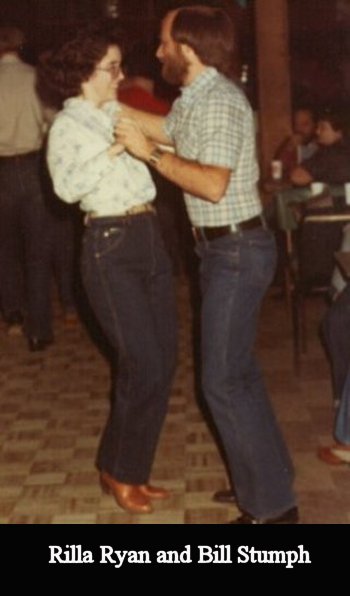
After dancing to two straight songs with Rilla, I was tired,
so I suggested we sit for a while.
"What do you think of this place?" Rilla asked.
"I don't care much for the music, but it is nice to have room to dance.
I guess now that I have gotten used to the twang, the music
doesn't bother me quite as much as it once did. Besides, now
that muscle memory has made the footwork automatic, I can ignore the music and still keep the beat.
So if I don't like the song, I don't have to listen."
Rilla smiled. "The music doesn't bother me at all.
I get a kick out of this place."
"What about the rough crowd?"
Rilla shrugged. "There is the occasional rude person,
but I get that wherever I go. For the most part people
leave us alone. The floor is so big, no one ever gets
close enough to run into me. My friends love this
place. Incidentally, I owe you a compliment.
That idea to switch to a two-hour format
was smart. My friends are beginners, but they
learned so much in just four hours, they were ready to go
dancing after the second lesson."
I
was surprised. "You mean the people at your table are Beginners?"
Rilla grinned. "Actually, yes, they are. Two of
them are friends from work and the rest are people we met in
Judy Price's Beginner class tonight."
Since Rilla was an advanced dancer, I was curious.
"What are you doing in a Beginner class?"
"I came along to
encourage my friends from work. Thanks to you, it's only
half-price to repeat a class and Judy Price uses me to
demonstrate. Hey, I like being the star."
Ah, now it made sense. These people were Monday
students from the other room. That explained why I
felt like I had seen some of these
people before. Since
they had been in Judy's class, I might have
passed them in the hall during Break Time. The studio wasn't just me anymore. My
program had grown so big I was
having
trouble keeping track of everyone.
"I have a question, Rilla. Why do you think the two-hour class format is superior?"
"I started classes
back when you used the one-hour class
format spread over two months. A one-hour class
doesn't move very fast. It might take four or five
weeks before a beginner feels comfortable going to a
club. But under the new format, they have the
equivalent of four weeks under their belt in just two
visits. If they go dancing right after class with
the moves fresh in their mind, they have a fighting
chance to lock in what they learned in just two weeks.
In other words, your idea has dramatically accelerated
their learning curve. My friends are having a
blast."
As I drove home that night, I had a big smile on my face. Maybe this Winchester Club
wasn't so bad after all. The amazing dance
floor was definitely a reason to give this place another try.
Based on the
fun I had with Rilla and her friends, I
decided to place a visit to the Winchester Club
on the social calendar for the end of January. It was certainly
worth the risk.
|
 |
JANUARY 1981
SYNCHRONICITY
ACHIEVED
|
I often speak of how lucky I was during the formative years of my dance
career. Doors would open without warning and take me
completely by surprise. Sensing an
opportunity, I would walk through the door and do my
best to take advantage. The Winchester
Club
was a perfect example. When I moved to
Dance Arts, I had no idea this giant dance
hall was right down the street. Just one mile!
If you caught the two traffic lights just right, you
could be dancing five minutes after class ended.
The
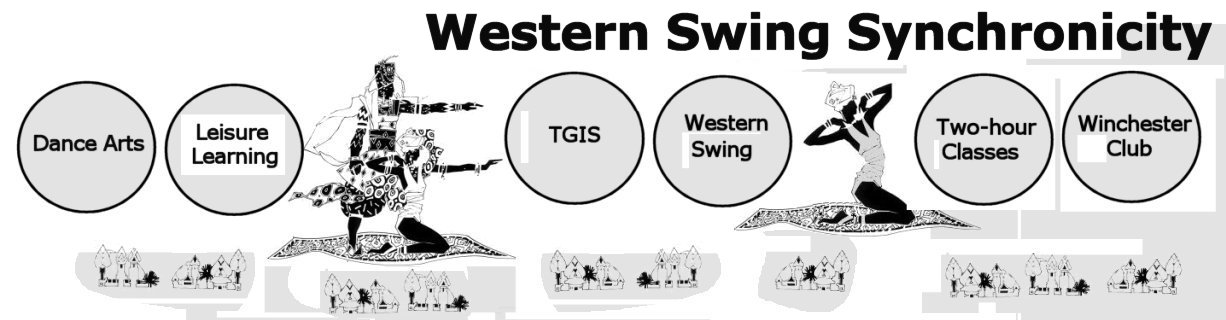
Winchester became the final piece to a series of lucky breaks I refer to as the Western Swing
Synchronicity. The Winchester Club was
invaluable because it worked hand in hand with our
new two-hour format. Visualize a guy who
finishes his 7-9 pm dance class. The moves are
fresh in his mind and bed time is not till 10:30 on
a work night. So the man turns to one of the
ladies in his class and says, "Hey, would you
like to join me at the Winchester Club down the
street and practice with me for a little while?"
The lady smiles and says sure.
Five
minutes later they are dancing. Let's say they
have fun. They dance two songs, then sit and
talk. Then they dance some more up to an hour
or so. They say good night, maybe a hug, maybe
a warm "let's do this again next week!" and
still have 30 minutes to drive home. In other
words, the proximity of the dance studio and the
dance hall allowed students to make friends during
their two-hour class, then use what they learned to
pursue Dance and Romance immediately after class.
This was sheer magic.
|
 |
From my point of
view, I was the beneficiary of not one, but two Western
Synchronicities separated by one year. The Country Crossroad
Synchronicity, Event 89, realized its outcome in
January 1980. The Western Swing Synchronicity,
Event 96, realized its outcome in January 1981.
|
|
THE URBAN COWBOY WESTERN ERA |
| |
|
096 |
Serious |
Synchronicity |
1981 |
| |
The
combination of a new dance system (Western Swing), a perfect location for classes,
Leisure Learning, TGIS, the 2-hour format and the
nearby Winchester Club lead to the best year of Rick's dance career.
The future success of the studio is assured. |
|
| |
|
089 |
Serious |
Synchronicity
Lucky Break |
1980 |
| |
At the dawn
of the Urban Cowboy Western Era, Rick is stunned
to discover he is the only Western teacher in Houston (just like Disco two years
earlier). Lucky breaks abound: Right Place at Right Time, Meyerland Club, Joanne, Fright Night, Class Factory Spotlight
Effect, TGIS. Despite Rick's Blindness towards Western, his mistakes fail
to harm him. These factors combine to
make Rick Houston's best-known C&W teacher. |
|
| |
The Country Crossroad
Synchronicity began
when
the Meyerland Club offer to teach a western class came
out of thin air. (September 1979). My next stroke of luck came when Joanne
reluctantly agreed to help me using the Helen Keller learning
technique. Joanne was my only hope, so thank
goodness she came through. Due to extreme prejudice against the
music and dancing, I wanted to quit. A chance meeting with
Ted Weisgal at Miller Theater convinced me to continue (October).
Then came the Ides of Waltz and Fright Night
(November). During my miraculous escape, I became aware that
Western dancing had a lot more to offer than I had previously realized.
The next day I phoned Deborah to get a class listing
inserted to
her January Class Factory schedule. The
timing was remarkable because at that moment Deborah was
waiting for a return phone call from
a potential C&W instructor. In other words, I got my
January Listing into her catalogue just under the wire.
Thanks to this series of strange situations, I discovered in January 1980
that I was probably the only Country-Western teacher in Houston.
In a city of a million residents, I stood alone ready to take advantage of an
unexpected surge of interest in Western dancing.
Thanks to a sudden insight that I could create enough new
Western patterns to keep my students interested in the early
stages of the 1980, I was able to expand on my head start.
The
Western Swing Synchronicity began with TGIS
in April. The debut of Urban Cowboy
created an avalanche of new interest (June). A position with Leisure Learning
was available just when Class
Factory went under (September). My Eviction
turned to gold when Glen
Hunsucker offered a last-second rescue to
Dance Arts (October). When every effort imaginable to
decipher the Riddle of the Double Turns
failed, Herb Fried appeared out of nowhere to offer me the
secret (November). This led to the start of Western
Swing lessons in January 1981. The introduction of the
Two-hour format was wildly popular (January) The final touch came
with the Winchester Club (January).
The
Western Swing Synchronicity created a perfect
storm of positive
energy that made
1981 the greatest
year of my dance career.
From this point
on, I never worried again. My Magic Carpet Ride
had reached the point where the future of my dance program was
guaranteed.
|
 |
|
|