Barcelona 2009
Home Registration Who is Going?

Barcelona 2009 Who is Going? Registration
   
Greece Italy Home Who is Going? More about Greece Italy Turkey Registration

The SSQQ 2009
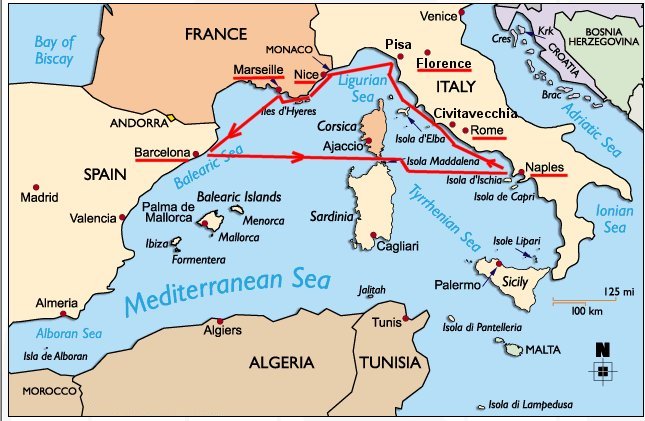
Barcelona Cruise

Sunday, September 27th -
Sunday, October 4th

A 7-day cruise through the Western Mediterranean Triangle aboard Royal Caribbean's Voyager of the Seas


Your chance to see the Leaning Tower of Pisa,
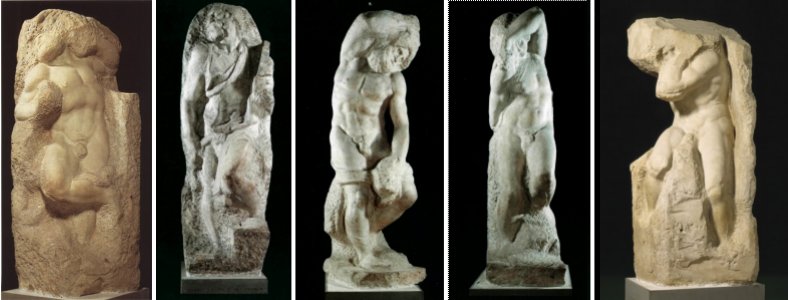
Mount Vesuvius and Pompeii, Michelangelo's David, the Spanish Flamenco, the Roman Colosseum, the
Paintings and Sculpture of the Renaissance, the Swiss Alps, the Casinos of Monaco, and the Beaches of Nice!

Day One:  Barcelona, Spain -- Departs 7:00 pm

Day Two:  Fun Day at Sea Cruising the Mediterranean

Day Three: Naples/Capri, Italy -- 7 am - 7 pm

Day Four: Rome, Italy  -- 7 am - 7 pm

Day Five: Florence/Pisa -- 7 am- 7 pm

Day Six: Nice, France -- 7 am - 7 pm

Day Seven: Marseilles, France -- 7 am -
7 pm

Day Eight: Barcelona, Spain -- Arrive 7:00 am - 7 pm


ABOUT THE SSQQ 2009 BARCELONA CRUISE

MARLA ARCHER'S NOTE:  
 
At our dinner table during our 2008 Italy-Greece Trip, the favorite topic of conversation was where we wanted to go next year in 2009.  Over the course of our trip, the consensus was strongly in favor of going to Barcelona and making the Magic Triangle Trip across the Western Mediterranean Sea.

Due to an odd arrangement of dates in 2009, the studio is going to be closed for seven days near the end of September.  We have never taken a week off in September before in thirty years, so this is a peculiar circumstance (one reason is that instead of 28 days of classes in December, we will only have 25 days of classes).
 
The point is that this is the perfect opportunity for the studio to take a cruise!   No student has to miss a class and no teacher has to find a substitute.  Instead we are all going to Spain, Italy, and France!  We will set sail on September 27th aboard The Voyager of the Seas, one of Royal Caribbean’s finest ships

It should be pretty easy to wrap your mind around the incredible highlights of this trip - the Leaning Tower of Pisa, Vesuvius and Pompeii, the stunning architecture of Barcelona, the marvelous museums and ruins of Rome, the museums of Florence complete with Renaissance paintings and Michelangelo's David, the casinos of Monaco, the fabulous beaches of Nice, plus all the incredible shorelines of Northern Italy and Southern France.

What better way to explore this part of the world than sharing the adventure with all your friends.  Where else can you combine so much history, natural beauty, rich culture and tradition, all the while dancing your way across the magnificent Mediterranean Sea?

We are visiting the birthplace of the Renaissance. There is so much to see that you will go crazy having to choose one exciting destination over another. 

Will it be a trip to explore ancient ruins or an expedition to witness spectacular mountain vistas and enjoy the
compelling natural beauty?  Or will it be a chance to view the rich architectural and historical heritage, or just visit one of the many stunning beaches?  Will you make a trip to Pompeii  or visit the exotic Isle of Capri?  And can you possible see all of Rome in a day (no, but that won't stop you from trying!)  Don't worry, whatever you choose, you can't miss!!

Barcelona, Spain

Barcelona Parc de la Ciutadella

Barcelona Architecture

 Barcelona, Spain

Day One

Our cruise departs on Sunday from Barcelona, Spain at 7:00 pm in the eveningWhy not come a day or two early to explore Barcelona, Spain's  most stylish and dynamic city in even greater depth.

Barcelona is located in the northeastern part of the country, 90 miles south of the French border. People from all around the world enjoy visiting this city for its individuality, cultural interest and physical beauty. When Hans Christian Andersen visited in 1862, he remarked that Barcelona was the "Paris of Spain." You're likely to agree. The city is a major cultural center with a fascinating history. Everywhere are archives, libraries, museums and buildings of interest - plus superb examples of modernist and Art Nouveau décor and the unique architecture of Antoni Guadi.

Antoni Guadi was a unique, universal artist who ahead of his time.  He was able to invent a whole new world of fascinating shapes and colors through his architecture.  His most famous works such as the Sagrada Familia Church, Gull Park, Casa Mila House or “El Capriccio”.

Everyone who stands before one of Gaudí’s works has the same sensation: the structures take on shapes from nature and their beauty is all consuming. Gaudí was one of the great representatives of Modernism and he revolutionized the canons of architecture.

La Sagrada Familia is one of Gaudi's most famous works in Barcelona. It's a giant temple that has been under construction since 1882 (that's not a typing error!) and it's not expected to be completed for between 30 to 80 years (time for completion varies depending on different sources of information.)  Controversy surrounds the building of the Sagrada Familia. Today new construction materials are being used which, some feel, Gaudi himself would not have used.   When you visit the building you will see the contrast in the stone color between the front and back of the building. Also the actual style of construction appears somewhat different between the new and old parts of the building.   Gaudi played an active role in directing the construction of the Sagrada Familia until his death in 1926. He would often request that work be modified and adjusted until it was exactly what he had in mind. However today, because of the nature of the existing designs, his work is partly open to interpretation.  Interpretation of the ordinal designs by present day architects is particularly challenging because the actual construction stones are irregularly shaped.  The building is still under construction so be prepared to see a lot of work continuing when you visit. However this in itself is interesting, especially if you visit the museum inside the building. There you will see the stonemasons at work carving stones to be used in the building.  Regardless of all the controversy surrounding the Sagrada Familia it is a truly magnificent building and an absolute must-see when you visit Barcelona.

Another must-see creation of Gaudi is Park Guell.

Park Gull seems as if it were taken from the pages of a fairytale: strange, eccentric, even dream-like, but undeniably beautiful. A stroll through the park will awaken even the sleepiest imaginations. The peculiar shapes and daring color combinations mixed in with the park’s vegetation create a unique world to which visitors feel irresistibly drawn. 
Every corner of the park displays the architect’s passion for nature’s forms: Gaudí wanted human intervention in this forest to blend in with the landscape, to complement it, and he certainly achieved this. Snails, mushrooms, leaves, flowers, tree trunks and elephants appear constantly in the mosaics and in the architectural forms. Even the bell in the chimney of the concierge’s house is shaped like an inverted mushroom.

The original idea for Park Guell was conceived in 1900, when Eusebi Gull purchased land on the mountain of Carmel, at that time on the outskirts of Barcelona to site a development in which he put Gaudí in charge. The idea was to copy the English “garden city” model (thus the word “park”), and build a few homes in idyllic surroundings with wealthy people in mind who wanted to get away from the crowded streets and insalubrious life of the city. Three kilometers of paths were built along with a plaza, stairways, the concierges’ pavilion and a model house to tempt potential residents. After 14 years, and seeing that the development was a commercial failure, it was abandoned and donated to the city council, which then converted it into a public park.

Be sure to make a visit to the Parc de la Ciutadella.  The Cascada is one of Barcelona's most remarkable sites. Fontseré designed the monumental fountain and artificial lake, located in the grounds of the Parc de la Ciutadella, in 1875. Both the cascade and the lake were intended to camouflage a huge water deposit in the central section of the waterfall, which can be reached by two flanking symmetrical stairways.  Curiously, Gaudí worked on this project as a young architectural student. 

A stroll down Las Ramblas is an absolute must do!  The word Rambla, derived from the Arabic word ‘ramla’, serves as a reminder that in earlier times, the street was a gully that ran parallel to the medieval wall, and carried rainwater down to the sea.  Now, Las Ramblas is Spain’s most famous street, a boulevard lined with trees, which is almost 2km long and is dotted with hotels, cafes, restaurants, and news stands. It stretches from Placa de Catalunya, a main square full of shops, restaurants, and banks, located at the centre of the city, down to the monument of Columbus on the waterfront.

 The avenue is broken up into five sections, each with its own name and characteristics. The first one is La Rambla de Canaletes, which was named after the fountain Font de les Canaletes. Legend says that whomever drinks from this fountain will forever keep returning to Barcelona.

The next area is named after the Estudi General (university) and is called La Rambla dels Estudis. But some also call it La Rambla dels Ocells (avenue of the birds), because of its many places selling birds and small animals.

Next is La Rambla de les Flors, where you can buy all kinds of flowers. This is also where you find the century-old Boqueria Market. Inside this market you can find the freshest produce, meat, fish, and dried fruits.

At the seafront is La Rambla de Mar where you can find the beach, an aquarium, restaurants, movie theatres and popular nightclubs.

The Euro, the currency of the European Union is the official currency in our ports. Many stores and restaurants accept major credit cards, which usually offer a good exchange rate.  When shopping remember there is a value-added tax to most purchases.

Depending upon the size of our group, we will have our SSQQ Welcome Aboard Cocktail party this evening. Meet your fellow SSQQ Cruise passengers and enjoy unlimited cocktails and dance to your favorite tunes as we sail along the Western Mediterranean coastline.


Naples and the Isle of Capri,  Italy

Naples

Naples

Naples and the Isle of Capri

Day Three


We arrive at Naples at 7:00 am on Tuesday. 

Naples is not only picturesque, it's also one of the world's greatest cultural centers, filled with extraordinary works of art and architecture in the classical Greek and Roman styles. It is the third most-populated city in Italy and the biggest city in Southern Italy. Its name comes from the Greek Neapolis meaning new city. Its close proximity to many interesting sites, such as Pompeii and the Bay of Naples, makes it a good base for exploring the area. Naples is a lively and vibrant city, full of wonderful historical and artistic treasures and narrow, and winding streets with small shops.

Naples is in the region of Campania in Southern Italy, about 2-hours south of Rome. It sits on the coast on the northern edge of the Bay of Naples, one of the most beautiful bays in Italy. Its harbor is the most important port in Southern Italy.

Pizza, one of Italy's most famous foods, originated in Naples and pizza is taken very seriously here. You'll find lots of great pizza places but be sure you look for one with a wood-burning oven! Spaghetti also became popular in Naples and today the best is with clams or mussels. Seafood is abundant and very good in Naples, too.

Top attractions in Naples include the National Archaelogical Museum, Duomo, Spaccanapoli district, shopping, the harbor, castles, and other museums and of course a visit to Pompeii.

The National Archaeological Museum of Naples, Museo Archeologico Nazionale di Napoli, has one of the world's best collections of Greek and Roman antiquities, including mosaics, sculptures, gems, glass and silver, and a collection of Roman erotica from Pompeii. Many of the objects come from excavations at Pompeii, Herculaneum, and nearby archaeological sites.  The Naples archaeological museum is one of Italy's top archeology museums and a Naples must-see site. Highlights include:

Mosaics - Covering the period from two centuries BC until the eruption of Vesuvius in 79 AD, most of the mosaics are parts of floors or walls from Pompeii, Herculaneum, and Stabiae. many have figures from Greek paintings. The most well-known are the mosaics from the House of the Faun in Pompeii.

Secret Cabinet - This room was created in the early 1800's to house the museum's many sexual items. It was closed for many years but reopened in 2000. Visitors must be at least 11 years old.

Frescoes
- Most of the frescoes come from walls in Pompeii. Covering a period of about two centuries, the frescoes are excellent examples of Roman painting. They cover a variety of themes, including mythological, landscapes, and scenes of daily life.

Temple of Isis
- A special exhibit holds wall painting removed from the temple of Isis in Pompeii as well as artifacts from the temple.

Pompeii Model
- Made in the 19th century, the model of Pompeii is very detailed and helps the visitor visualize what it looked like before the eruption.

Sculptures
- The museum has a huge collection of Greek and Roman sculptures, many of them Greek and Roman.

Coins and Metals
- Six rooms containing more than 200,000 coins and medals from Ancient Greece, Rome, medieval times, and the Bourbon era.

While you’re in the area, you’ll want to visit Pompeii, one of the most famous excavation sites in the world.  A thriving city 1900 years ago, it was devastated by the eruption of Mount Vesusvius in 79 A.D. when 30 feet of volcanic ash and pumice stone cover it.  The ruined city of Pompeii, now dug out from the layers of dried lava that once swept through it, brings to light the life of 19 centuries ago and has sparked the imagination of the world.

Numerous myths have surrounded Pompeii, one of which is that a completely intact city was rediscovered. Actually, the Pompeians (that is, those who escaped) returned to their city when the ashes had cooled and removed some of the most precious treasures from the resort. But they left plenty behind to be uncovered at a later date and carted off to museums throughout Europe and America.

After a long medieval sleep, Pompeii was again brought to life in the late 16th century, quite by accident, by architect Domenico Fontana. However, it was in the mid-18th century that large-scale excavations were launched. Somebody once remarked that Pompeii's second tragedy was its rediscovery, that it really should have been left to slumber for another century or two, when it might have been better excavated and maintained.

Pompeii is the most important classical archeological site in Europe. Its wealth of monumental buildings is unmatched, as is its collection of mosaics and wall-paintings. But its architecture and art didn’t exist in a void; they were the framework for a thriving commercial town where 20,000 people lived, traded, ate, drank, worshipped and frequented brothels.

Be sure to look for The Duomo.  It is a 13th century Gothic cathedral dedicated to Naple's patron saint, San Gennaro. A huge festival is held when a vial of his blood is taken out of its storage place in hopes that it will liquefy. On one side of the duomo is the 4th century Basilica Santa Restituta (the oldest church in Naples) with columns believed to be from the Temple of Apollo, good ceiling frescoes, and archaeological remains from the Greeks to the middle ages. The 5th century baptistery has good 14th century Byzantine-style mosaics.

Spaccanapoli is one of the main streets crossing Naples and is the heart of the historic center. Teeming with people, the street holds many interesting churches, shops, and other buildings. The Spaccanapoli district is a string of narrow, winding streets and is mainly a pedestrian zone so its a fun place to wander around. Via San Biagio dei Librai, in Spaccanopoli, has some of the best antiquarian book dealers in Italy, terracotta religous and nativity figurines, and a doll hospital. Via San Gregorio Armeno is famous for its nativity workshops.

Naples Coastline

Naples Sculpture

Rome, Italy

Castle Saint Angelo

The Roman Coliseum

Rome, Italy

Day Four


Whether it's the Forum, the Sistine Chapel, the Pantheon or St. Peter's Basilica that sparks your interest and intellect, Rome is home to a lifetime's worth of historical, architectural and spiritual sites. Depending on traffic, the drive from Civitavecchia to Rome takes approximately an hour and a half.

Experience the history of Rome as you wander around the Colosseum, one of the most important monuments of ancient Rome and the Roman forum.   A masterpiece of classical architecture, the Colosseum is an enormous amphitheater where gladiators, Christians and wild beasts once battled to the death in front of 55,000 spectators.  Upon completion, spectacular 100-day celebrations were organized as part of the opening ceremony in 72 AD. Its name is believed to come from Nero's enormous statue of Colossus that stood close by. The admission charges are about EUR10.
 
The Forum was designed to be the centre of social, political and economic life in the city. The innumerable remains include the well-conserved triumphal arch of Emperor Septimius Severus, with reliefs depicting his victories and the base of the Temple of Saturn with its eight columns and their splendid Ionic capitals. The 'Rostrum' is the famous platform from which Mark Antony gave his oration in Shakespeare's play after Julius Caesar's assassination. The platform became the setting for many important events in Rome's history. It was named the 'rostrum' after the bows of the ships that form the decorative motif. The Temple of Vesta was the home of the Vestal Virgins, charged with keeping the sacred flame alight. The circular foundations still remain, near to a garden in which traces of the House of the Vestal Virgins can still be seen. The Basilica of Constantine and Massentius was used as the court, and the three remaining barrel-vaulted naves give an idea of its gigantic structure. The Arch of Titus celebrates victories in Judea, and in the reliefs you can see the spoils of war, including an altar and a seven-armed chandelier. Admission is free; guide tours in English cost EUR3.20

Visit the Vatican Museum, where you can walk through the many rooms that house the largest art collection in the world. 
The Vatican is among the most important historical sites in the world. The seat of the Holy Roman Catholic Church, The Vatican is also the home of the Pope. As the smallest state in the world, the Vatican has figured in key events throughout history. Occupying about one half kilometer of Rome, The Vatican is further significant because of its fabulous architecture, religious, and artistic treasures. It was Pope Julius II della Rovere in the 16th century who commissioned Michelangelo to paint the history of creation on the ceiling of the Sistine Chapel. Among countless other notable events in the history of this important city are the convening of the College of Cardinals, at the death of a reigning Pontiff, for the purposes of electing a new Pope. No visit to Rome is complete without an excursion to The Vatican, a place so steeped in history and tradition that you will never forget it.

Travel through the magnificent St. Peter’s Basilica, the largest church in the world. . Construction began in 1452 on the site where St. Peter was buried and took over 100 years to build.  It rests on 800 pillars and is littered with 44 altars.   During the next 200 years, such famous masters as Bramante, Michelangelo, Raphael and Bernini worked on its design and created an unparalleled masterpiece.  View Michelangelo's "Pieta" and the 85-foot-high Bernini Pulpit.   Admire one of the many masterpieces created by Michelangelo, the famous statue of Moses. This majestic bearded figure is depicted holding the tablets of the Ten Commandments.  

If this is your first visit
to Rome time, you must take in the Sistine Chapel.  It is considered a masterpiece of Renaissance art.   Dominating the chapel is Michelangelo’s ceiling paining of the “Creation of the World.”.  The Sistine Chapel receives 50 million monthly visitors.  The Chapel was built somewhere between 1477 and 1481 by Pope Sixtus IV.  From 1480 to 1483, famous artists of Renaissance, such as Botticelli, Perugino, and Ghirlandaio, decorated the walls. After twenty years, Julius II commissioned Michelangelo to decorate the ceiling in 1508. Today, after the restoration, tourists can visit the chapel and see Michelangelo's “Last Judgment.”  You will invariably find the Sistine Chapel crowded with hundreds of tourists, so be prepared. The best way to see it is to go to the Vatican Museums early, so that you're among the first in line when they open. Silence should be observed and photography is not prohibited.

The Pantheon was commissioned by Marcus Agrippa, restored by Domitian, and subsequently rebuilt by Hadrian (who added the dome) before being turned into a church in the early 7th century by Pope Boniface IV. The building's sole source of light is the opening at the dome's apex (the oculus); according to popular legend, this formed the base for the bronze pinecone that is now in the Vatican's 'Pigna' courtyard, where it is used as a fountain. Many famous Italians are buried in the Pantheon, including Renaissance painter Raphael and King Vittorio Emanuele I.

No visit to Rome can be complete without a stop at the Fontana di Trevi.
  Tradition has it that throwing a coin over your left shoulder into the fountain guarantees a swift return to the world's most beautiful city. Anita Ekberg's dip in it was immortalized in Fellini's 'La Dolce Vita', and Italian actor Toto even sold it to an American, passing himself off as its owner. Earlier it was the setting for the award-winning "Three Coins in the Fountain" motion picture, ensuring its popularity worldwide. Designed by Nicola Salvi for Pope Clemente XII, it was completed in the second half of the 1700s. The statues in the centre represent Neptune supported by Tritons on either side while rococo-style Poli Palace provides the perfect backdrop.

Marla's Note: We had the pleasure of visiting Rome in 2008.  Rome was our absolute favorite stop of the entire trip.  Please read Rick's write-up about our adventures:  Rome 2008

Trastavere at Night


Trevi Fountain


Victor Emanuel Monument

Roman Coliseum, One the new Wonders of the World

Castle Saint Angelo

View from the Basilica

Villa Borghese Grounds

St Peter's Basilica


Florence and Pisa in Italy

Florence and Pisa  

Day Five

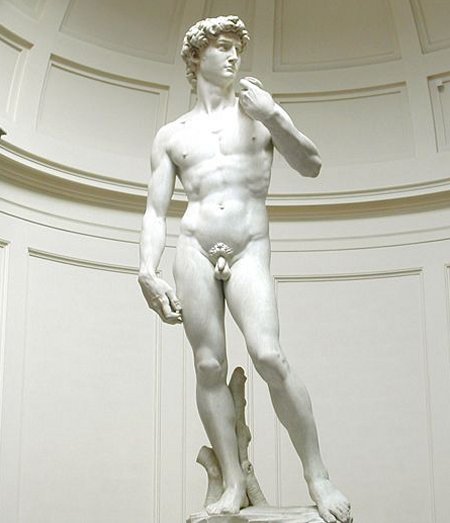
Florence is the Renaissance city -- home to Michelangelo's David, Botticelli's Birth of Venus, and Raphael's Madonnas. It's where Fra' Angelico painted delicate Annunciations in bright primary colors and Giotto frescoed monks wailing over the Death of St. Francis. The city is so dense in art, history, and culture that even a short visit can wear out the best of us. Take a hint from that great pragmatist Mark Twain, who, after acknowledging the genius of Michelangelo, said "I do not want Michelangelo for breakfast -- for luncheon -- for dinner -- for tea -- for supper -- for between meals. I like a change occasionally."

Don't necessarily pass up the Uffizi or take a rain check on David and the Accademia, but do take the time to enjoy the simple pleasures of Florence -- wander the medieval streets in Dante's old neighborhood, sip a cappuccino on Piazza della Signoria and people-watch, haggle for a leather jacket at the street market around San Lorenzo, or immerse yourself in the greenery of the Boboli Gardens.

Florence’s lofty domes and sacred art will make your senses reel

 The cultural and historical impact of Florence (or Firenze) is overwhelming.  Close up, however, the city is one of Italy’s most atmospheric and pleasant, retaining a strong resemblance to the small late-medieval centre that contributed so much to the artistic and political development of Europe.

 Its striking buildings, formidable galleries and treasure-crammed churches attest to the Florentine love of display.  Even long after it had set on the political and economic horizon, Florence upheld its elegant appearance: its skyline, all russet rooftops and lofty domes, is indeed picturesque.

Florence's best park is the Medici grand dukes' old backyard to the Pitti Palace, the Giardino Boboli. Less scenic, but free and more jogger-friendly, is the Parco della Cascine along the Arno at the west end of the historic center. Originally a wild delta of land where the Arno and Mugnone rivers met, the area later became a Medici hunting reserve and eventually a pasture for the grand duke's milk cows. Today, the Cascine is home to tennis courts, pools, a horse racetrack, and some odd late-18th- and early-19th-century features like an incongruous pyramid and funky neoclassical fountains. There's a flea market here every Tuesday morning. Though perfectly safe in the daylight, this park becomes a den of thieves and a hangout for heroin addicts after dark, as do most sections of the Arno's banks, so steer clear.

Of course you must see the Quintessential Man, David: Michelangelo's David in the Galleria dell'Accademia is the perfect Renaissance nude, a masterpiece of sculpture, an icon of homosexual camp, and symbol of Italy itself.

Be sure not to miss seeing Masterpieces at the Gallerie degli Uffizi, too: The Uffizi is one of the world's great museums, and the single best introduction to Renaissance painting, with works by Giotto, Masaccio, Paolo Uccello, Sandro Botticelli, Leonardo da Vinci, Perugino, Michelangelo, Raphael Sanzio, Titian, Caravaggio, and the list goes on. The museum is deceptively small. What looks like a small stretch of gallery space can easily gobble up half a day -- many rooms suffer the fate of containing nothing but masterpieces. Don't miss Sandro Botticelli's Birth of Venus. The goddess of love is born from the sea; a beauty drawn in the flowing lines and limpid grace of one of the most elegant masters of the early Renaissance.

Strolling through the Piazza della Signoria: The monumental heart of Florence (and Tuscany's most famous square) is an open-air museum of sculpture, dominated by Michelangelo's David (a copy of the original, which used to stand here). The powerful mass of the Palazzo Vecchio dominates one end of the square; another is defined by the 14th-century Loggia della Signoria, filled with ancient and Renaissance statues (the most celebrated being Bevenuto Cellini's Perseus holding the severed head of Medusa).

Or add a side-trip to the city of Pisa.

Pisa, located in western Tuscany, is known throughout the world for its famous Leaning Tower, but there is so much more to Pisa than just this striking landmark. The ecclesiastical city of Pisa began life as a seaside settlement around 3,000 years ago and was first laid out in the mid-eleventh century. Pisa is crammed full of wonderful, historical monuments and buildings dating back many hundreds of years and much of Pisa has retained its medieval appearance. Pisa is also known for its excellent university, which was established in 1343 and has become one of Italy's top schools.

The leaning tower of Pisa was commenced in 1152, and was not finished until the fourteenth century.  The cathedral to which this belongs was erected to celebrate a triumph of the Pisans in the harbor of Paleromo in 1063, when allied with the Normans to drive the Saracens out of Sicily.  It is a circular building, one hundred feet in diameter and 179 feet in extreme height, and has fine mosaic pavements, elaborately carved columns, and numerous bas-reliefs.  The building is made from white marble.  The tower is divided into eight stories, each having an outside gallery of seven feet projection.  The top most story overhangs the base by about sixteen feet, although the center of gravity is still ten feet with the base.  The building is perfectly safe.  It has been supposed that the inclination was intentional, however the tower leans more likey because the foundation has sunk.  The defective foundation probably became perceptible before the tower had reached about one-half its height because it looks like there was an effort to restore the tower to a perpendicular position.  You can see that the walls are strengthened with iron bars at this point.


Florence
 

El Duomo
 

Nice, France and the Casinos of Monaco

Nice

Monaco

Nice, France and Monaco

Day Six


Villefranche is the gateway to the one-of-a-kind French Riviera, home to Monte Carlo, Cannes and Nice. Shaded by jagged mountains touching deep blue shores, Villefranche offers sunny beaches, sophisticated resort cities, quaint red-roofed villages and spectacular views.

While Villefranche is lovely, it’s truly remarkable for what surrounds it.  Be sure to visit some of its better-known neighbors:  Cannes, Nice and Monte Carlo.  These jet setter’s retreats are as remarkable for their beautiful beaches as the mansions and boutiques that surround them.

View the Rock of Monaco, the oldest of Monaco’s four quarters.  The Rock has always been a coveted possession, from the beginning of the Massilian colony of Monoïkos, named for the Ligurian tribes who occupied the area and vied for control of it; before that, it was a shelter for primitive populations. The Rock of Monaco was also the first conquest of the Grimaldi dynasty, the rulers of the country for more than 700 years, founded when the Guelf Francois Grimaldi disguised himself as a Franciscan monk in order to gain entry to the city and open the gates for his soldiers.

Explore the vaulted passageways and beautiful façade of Monaco's Prince's Palace and the Palace Square.  Bask in the unabashed opulence of this palace, decked out in colored marble and gold plating.  The Palace was built as a Genoese fortress circa 1215. Take in the Throne Room, where Prince Albert II holds state receptions. In the Main Courtyard with its horseshoe-shaped, Carrara marble staircase - three million stones create eye-catching geometric patterns.

The Palace Guard is always on hand to ensure security and protect the Prince and his Palace. At 11:55AM daily, watch the colorful changing of the guard.
 
Visit the Old town with all of its intriguing sights.  The bronze cannons protecting the harbor were Louis XIV’s gift to Monaco. The houses look medieval and they are. 

Travel along the mountainside roads of the French Riviera, which offer spectacular views of the small villages along the coast and the Principality of Monaco. As you leave Villefranche, you will see the famous Grand Corniche, which was originally built by Napoleon. Enjoy a scenic view of Roquebrune Cap Martin near the Italian border and La Turbie before reaching Monaco.

Try your luck at Monte Carlo's Grand Casino.  Browse the exclusive shops in Casino Square, or sit at a cafe and do some people watching.

 Make a stop at the charming medieval Village of Eze. Perched on the cliff 1,400 feet above the Mediterranean, the views are spectacular as you look back over Beaulieu and Villefranche.
Of all the perched villages along the Riviera, Eze remains the most popular with it’s quaint medieval core and cobblestone streets...Standing alone in the hills, it appears to have been built like an eagles nest, on a rocky spike 1400 feet above the Mediterranean. The strategic skills of the architects and laborers who built such a place have to be revered.   The village is best explored on foot, with its narrow cobblestone streets, many little shops and local artisans.

The Present structure of the village goes back to the Middle Ages but Eze has been occupied since the Bronze Age. Even before the Greek occupation, legend tells of the Phoenicians building a temple here, and, after the collapse of the Roman Empire, who held the territory for quite a while, the area underwent several invasions before it eventually belonged to Monaco for a long period. It wasn’t until sometime in the 1860’s that the inhabitants of Eze voted for annexation to France.

Today Eze is a favorite tourist site.  As you walk through the small archway that leads into the village, the streets become narrow and more intimate, sometimes twisting upwards in a series of steps, other times running smoothly beside carefully restored houses in small passageways, where you sometimes must shoulder your way through the tight crowds that arrive often each day in a never ending stream of buses.

Every house seems to have it’s own “smart” boutique or artists studio selling it’s own version of “typical” Eze souvenirs but don’t be discouraged, there are still a few spots where you can get away from the crowds and the village can be enjoyed to it’s utmost.   Le Jardin Exotique is such a spot...An exotic and lushly landscaped garden of exotic plants and cactus garden that was developed by Louis XIV which decorates the summit of the village and with those incredible views of the sea, from any vantage point, it truly is magnifique!

Monaco

Exotic Gardens

Nice Harbor

French Alps in the background of Nice

The Topless Beaches of Nice (don't expect to see Rick here)


Marseilles, France

Harbor of Marseilles

Marseilles Palace

Marseilles, France

Day Seven
Marseilles has a soul of its own. The Greek sailors of Phocaea founded the city in 600 B.C. This great city is the oldest in France and surely the most complex.

Second largest city in France and the largest commercial port, Marseilles, in the time of the French colonies, was the gateway to the Mediterranean; Today Marseilles remains a capitol of southern Europe, cosmopolitan and exuberant, with its picturesque old port, its Bouillabaisse and its folklore.

Difficult to know, Marseilles does not open itself up to visitors spontaneously.

The old town ("Panier") and port, the cliff road high above the sea, the wild inlets plunging into the deep blue water for 20 km. to Cassis, this is the Marseilles of the tourist guide. But the commercial port, the airport, the oil industry, the large population all play an important part in the economic role of the whole of Provence and complete the picture of a city rich not only economically but in culture, art and science.

To discover its unique character and beauty, one must leave the center of town and explore some of the "quartier" of which there are more than 100. Each quartier is a little Provencal village of its own with a church, a playing area for the game of Boules and the obligatory plane trees.

For the best view of the city, there's only one place to go: Notre Dame de la Garda. Entirely covered in gold leaf, it towers over Marseille at an impressive 500 feet tall (154 meters.) Throughout the years, it has served as a lookout post, a military zone and a place of worship. One can climb to 162 m, above sea level to visit the church of the patron saint of sailors. One can admire the cliffs the "Estaque" inspiration to Cezanne or go to Treille to pay homage to the well-loved Provencal writer Marcel Panel,

Marseilles can also be visited from the coast. From the islands "lles de Frioul" and the Chateau d'If with its legend of the Count of Monte Cristo, one has a beautiful view of this ancient maritime site.

Although in many respects Marseille is big and sprawling, dirty and slum-like in many places, much elegance and charm can be found there as well. The Vieux Port, the old harbor, is especially colorful, compensating to an extent for the dreary industrial dockland nearby.

Marseille has always symbolized danger and intrigue, and that reputation is somewhat justified. However, the city is experiencing a renaissance, and because it is now so easily reached by train from Paris, there is much hope for its economic future. Since the 1970s, a great deal of Marseille's economy has revolved around thousands upon thousands of North and sub-Saharan Africans who have poured into the city, creating a lively medley of races and creeds. One-quarter of the present population of Marseille is of North African descent. These Africans have flocked here to find a better life than what they had in their own shattered lands.

Marseilles today actually occupies twice the amount of land space as Paris, and its age-old problems remain, including a declining drug industry, smuggling, corruption (often at the highest levels), the Mafia, and racial tension. Unemployment, as always, is on the rise. But in spite of all these difficulties, it's a bustling, fascinating city unlike any other in France.

A city official proclaimed recently "Marseille is the unbeliever child of France. It's attached to France, but has the collective consciousness of an Italian city-state, like Genoa or Venice."


About the Barcelona 2009 Trip

A visit to the Mediterranean is on every person's must-see short list.  The Mediterranean is one of the world's favorite vacation destinations

The Barcelona Trip will be the 16th SSQQ Cruise Trip.  As always, you have the best of both worlds.  You can be alone with your sweetheart perched on a terrace overlooking the sea in  Capri or you can hang with the group whenever you wish.  Wherever you go, you will always have friends.  We watch out for each other. At dinner time when you wish to share tales of your adventures, you won't be talking to strangers, you will be talking with friends from home.

We chose this week for two reasons.  We were able to get a great rate for this great sailing time (cooler temps and less children).  Also, due to an unusual alignment of the 2009 holidays, we will be taking a week off at the end of September.  Since the studio is closed for a week's vacation, what better time to go exploring?

Our trip will be aboard Royal Caribbean
’s Voyager of the Seas.    This ship is part of Royal Caribbean's  Voyager Class, among the biggest vessels in the world.  It is 138,000 tons of fun.   A beautiful wooden dance floor is featured in a spacious attractive non-smoking lounge.   The ship is so plush even the Disco has a wooden floor as well.  The Voyager of the Seas sports some of the industry's most amazing features: a rock-climbing wall, ice-skating rink, an indoor, mall-like promenade, basketball court and in-line skating track.  
  
If you wish to go, here is what you need to do:

Fill out the registration form and provide a credit card number for your $250 deposit.   All passengers must have a Western Mediterranean Cruise 2009 registration form on file.  There will be new rules in effect for this cruise.

The first deposit of $250 per person is due by January 19th, 2009.


Final payment is due on July 15th.

Please Note: 
If you would like a specific cabin type/location not offered, please call and I will get that rate quoted.

Contact Marla Archer at 713 862-4428 or e-mail marla@ssqq.com with any further questions.

REGISTRATION FORM

RCCL Voyager of the Seas

Barcelona 2009 Who is Going? Registration
SSQQ Front Page Parties/Calendar Jokes
SSQQ Information Schedule of Classes Writeups
SSQQ Archive Newsletter History of SSQQ