 |
BIG ISLAND
Day Five -
The Waterfall Tour on the Big Island
Story written by Rick Archer
|
|
Our ship returned us for another look at the Big
Island. Today was a tour of Waterfalls!
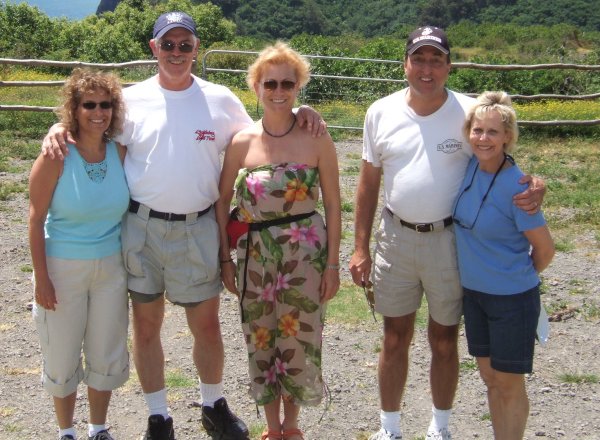
With our friends Jim and Denise Duncan and Victoria Hilford, Marla
and I were going to explore the northern side of the island and get
a first-hand look at the beauty of the area.
Our bus driver turned out to be about as different from Jailbird,
our lava field tour guide, as was humanly possible. I wish I
knew his name, but he said he was a professional photographer.
He was also an expert on the ecology of this island. I believe he
said he even taught classes on the subject. He was certainly
knowledgeable, that I am sure of. I learned more on today's
ride about science than I had since high school.
|
 |
 |
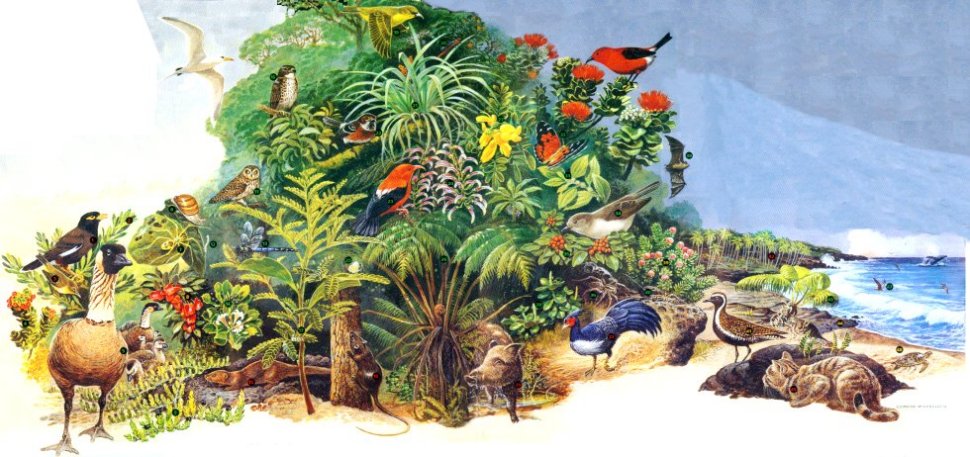
TROUBLE IN PARADISE
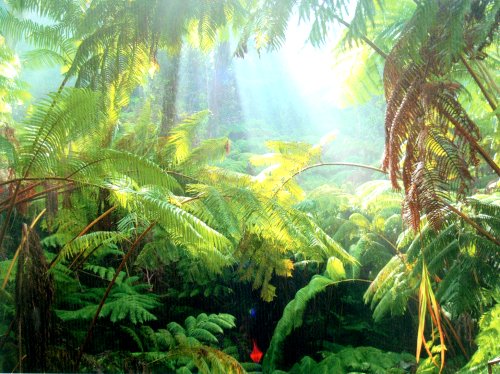
The Hawaiian Archipelago, once celebrated as islands of
evolution, are now islands of extinction. The arrival of
humans changed forever the original diversity of the life.
Forests disappeared as people cleared the land to plant crops and
establish communities. Polynesians and other settlers introduced
numerous alien plants and animals which thrived in their new home
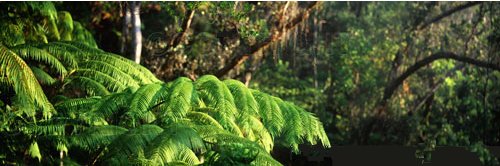
and multiplied. Their impact has been catastrophic. Pigs
destroy the understory of tree ferns and forests. Their muddy
wallows provide breeding grounds for mosquitoes that transmit avian
malaria and pox to native birds. Mongooses, cats, and rats eat
native birds and their eggs. Alien plants such as faya tree, guava
and kahili ginger displace vast areas of Hawaiian forests. The
onslaught of introduced plants and animals has caused the extinction
of countless native species and continues to threaten the remaining
unique life forms.
|
Because of its location, Hawaii is virtually isolated from the outside world,
which causes plants and animals to develop that are unique to the islands. When
Europeans visited Hawaii and brought with them plants, insects, and other
animals, the "foreign invaders" flourished and made easy prey of the natural
inhabitants of the islands. Because of that influx, Hawaii's native creatures
are in trouble. The plight has earned Hawaii the unwanted title of "endangered
species capital of the world."
|
 |
|
 |
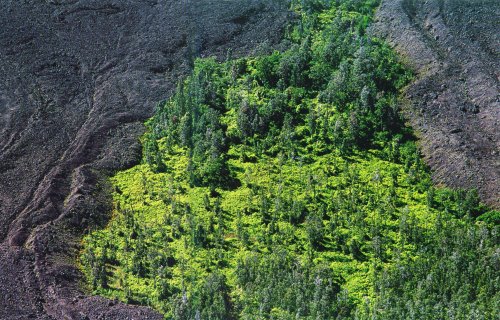
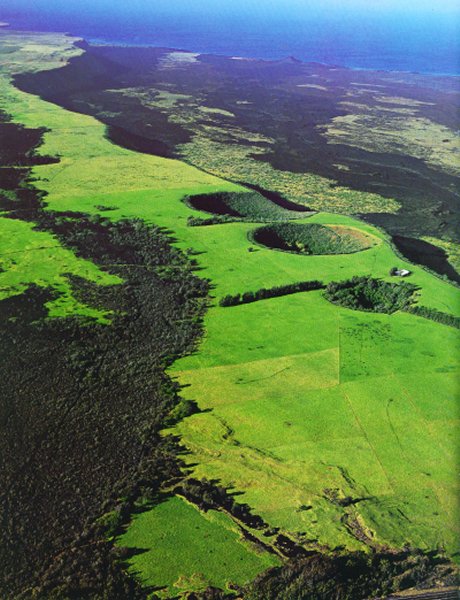
One thing I found interesting about the Big
Island was that it is still a work in progress. Since it is home to
a live volcano, this island's landscape is constantly being
rearranged.
Today as I write this story in July 2008, Kilauea is in the news
thanks to its lava spume that shoots 45 feet into the air.
Right now it is the most active volcano in the world! This
island is still being built, but in the process entire forests are
being destroyed in the blink of an eyelash by lava flows.
Wherever you go on the Big Island, you see evidence of lava flow
destruction and new ground. The picture on the right shows a
brand new lava beach, a lava field, plus greenery that was spared
during the lava's rush to the ocean.
|
 |
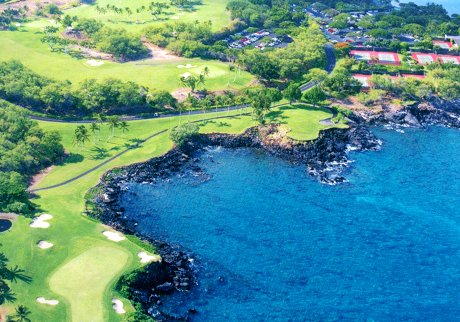
Another aspect of the Big Island that I found
interesting was that modern man doesn't have the patience to wait
centuries to undo the damage of the lava fields.
If Dubai can create islands in the middle of the Persian
Gulf, why can't the Hawaiians speed the regeneration process up a
few notches?
It isn't easy to see, but this golf course on the right was
built right on top of a lava field.
Do you see the jagged rocks below the gentle green carpet?
They brought in sand and dirt to cover the lava field, then put down
sod. Voila! Instant golf course.
In some ways it was an easy project. After all, the
lava had conveniently removed all the trees and anything else that
was in its way. This was the flattest land on earth!
|
 |
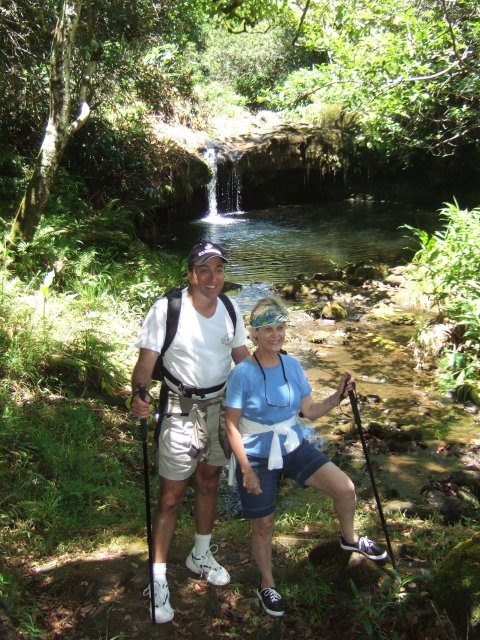
Here is Jim and Denise in front of a waterall.
|
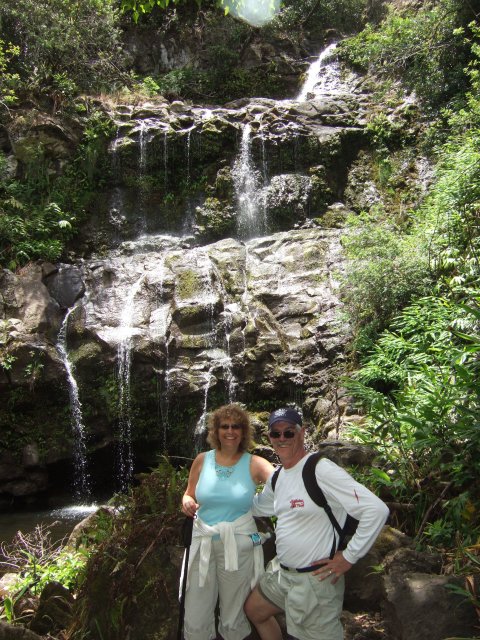
Here is Marla and Rick in front of a waterfall.
|
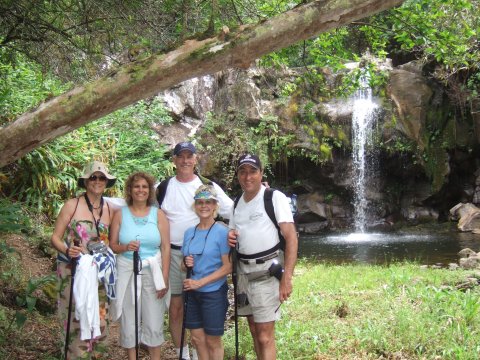
As you can imagine, our little waterfall tour was
very pleasant fun. There was nothing rugged about it. We
just kind of wandered around and every quarter mile or so we ran
into another cute little waterfall. At the end of the trip, I
discovered the last hole was only a few hundred feet from where we
started. The whole trip had been a circle!
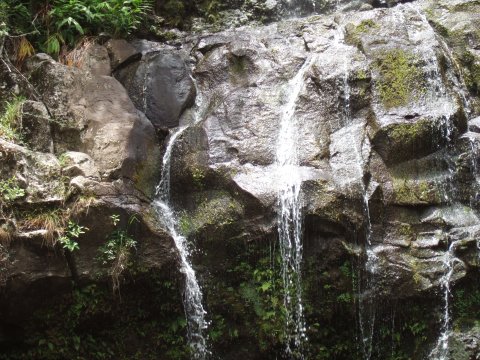
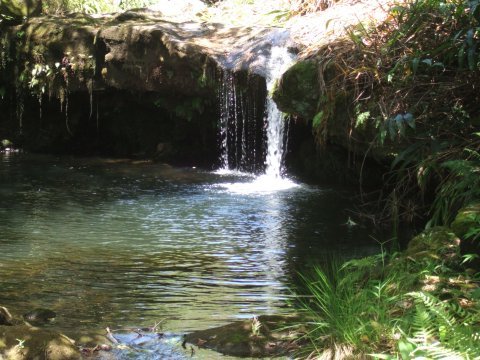
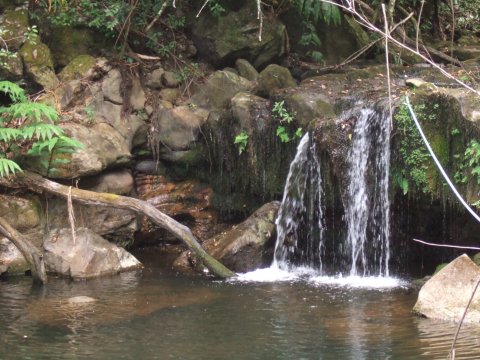
We must have seen at least five different waterfalls, maybe
even more. I studied my pictures, but couldn't tell the
difference. It turns out that most tropical waterfalls look
alike.
They all have water, they all have rocks on either side, they
all fall the same direction (gravity in action), and they all have
more water at the bottom plus lots of green plants everywhere.
I discovered that after a while, you almost don't notice them
any more.
|
 |
| |
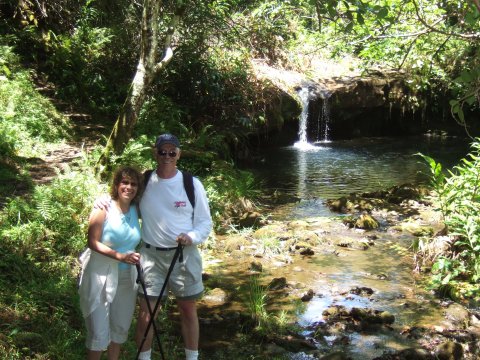
Here is Marla and Rick in
front of a different waterfall. |
 |
 |
|
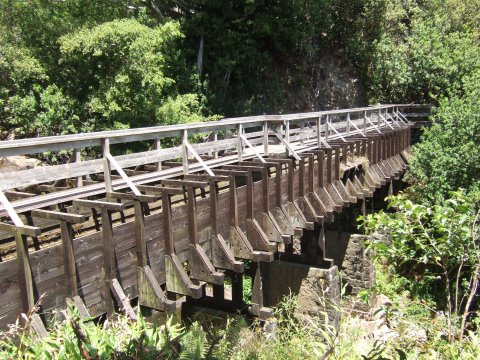
This is an aqueduct. It was
once used to transport water
to the thirsty sugar cane fields. |
Another
waterfall |
 |
 |
|
Another waterfall |
Another
waterfall |
 |
 |
As I was saying,
after a while, I began to get the feeling
when you have seen one waterfall,
you've seen them all.
I began to accidentally overlook a few. |
For example, here is a picture of one
waterfall I never
even saw. Marla
said there was a lovely waterfall
at this spot, but I never even noticed it. |
| |
The Tropical Swimming Hole
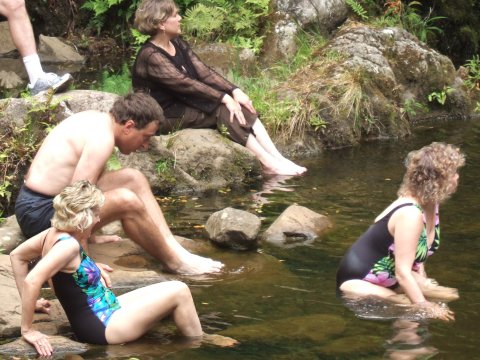
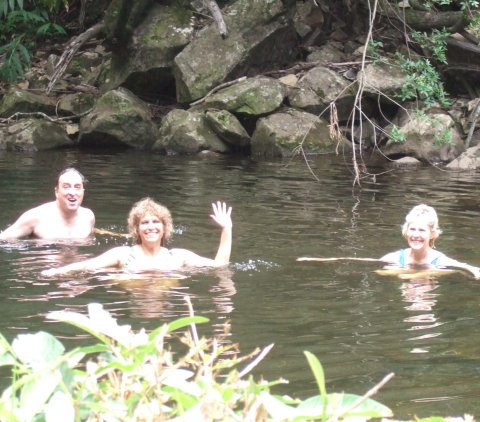
The final stop on the trip took us to a
waterfall with the perfect swimming hole. Our guide said would
be a good place to take a dip. Since we had all brought
our bathing suits, this was our big chance to jump into a tropical
pool!
The water was freezing! Brrr!! But then it warmed
up.
Jim handed me some pills he brought along to kill any bacteria there
might be in the water in case I swallowed some. Apparently there
were some cows upstream that, well, you know. I could tell
that Jim meant well, but that depressed me a little. I was
hoping my very first swimming hole would be pure. Oh well.
Let me add from that point on I did not swallow a single drop of
water. I didn't even put my head under water. I could
have been dying of thirst and I would not have drunk a single drop
of water.
|
 |
 |
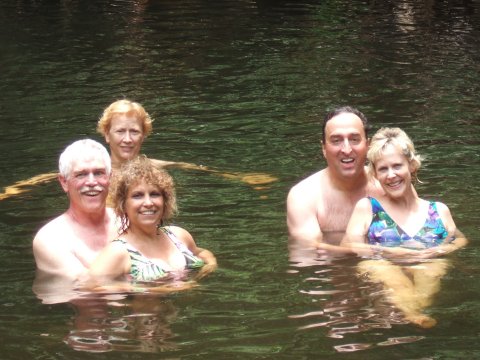 |
Have you ever heard the saying, "Don't
trust anything you see on the Internet"?
Case in point, the picture above is totally fake. Each person
entered the water separately, but I thought it would be fun to put them
all in the same picture.
Would you have ever known if I didn't confess?
|
If
you are curious to see how I merged all the people in the picture on
the left, I wrote a
story about it
a couple years later. Scroll to the middle of the page.
|
 |
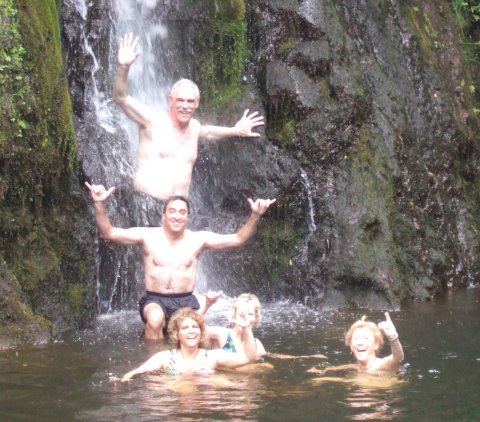 |
| As you can see, this was
fun! |
I promised them
I would be in the picture! This is another example of digital
manipulation. I was photographed all by myself. But I
thought it would be fun to add me in! It wasn't a very good job -
I forgot to add my lower body!!
|
|